

Planet
Be the sustainability benchmark
Autoneum understands the serious environmental problems facing the world today and knows we have a responsibility to help combat climate change and protect natural resources. We are committed to meeting the growing expectations of customers, investors, employees and local communities to operate as sustainably as possible. This is why our company has made sustainability a key part of its strategy. In 2024, Autoneum set ambitious goals to be the sustainability benchmark by improving our expertise in sustainable products and processes. This includes reducing greenhouse gas emissions and embracing a circular economy in our own operations and along the entire value chain.

Strategic targets for the Planet dimension
- Replace the least sustainable technologies of Autoneum with sustainable innovations
- Outperform international, national and OEM materials compliance requirements
- Build a culture of environmental sustainability
- Continuously reduce material waste and increase recycling capacities
- Continuously reduce emissions and energy consumption
- Continuously reduce water withdrawal
Operational Target 2027
Reduce non-hazardous waste by 40%
Progress update 2025- 39.4% reduction in non-hazardous waste directed to disposal in 2025 compared with 2019 baseline*
Reduce Scope 1 and 2 emissions by 20%
Progress update 2025- 26.8% reduction in 2025 compared with 2019 baseline*
Reduce Scope 3 emissions from directly purchased materials and tools by 20%
Progress update 2025- 35.4% reduction in 2025 compared with 2019 baseline*
Reduce water withdrawal by 10%
Progress update 2025- 40.2% decline in 2025 compared to 2019 baseline*
Increase the share of renewable energy to 25%
Progress update 2025- 22.4% in 2025
*All Operational Targets 2027 exclude Jiangsu Huanyu Group and Chengdu Yiqi-Sihuan. The Scope 1, 2, and 3 emissions targets were determined in 2021. Due to low volumes as a result of the COVID-19 pandemic in 2020, the decision was taken to use 2019 as the baseline.
Transformation toward a circular economy
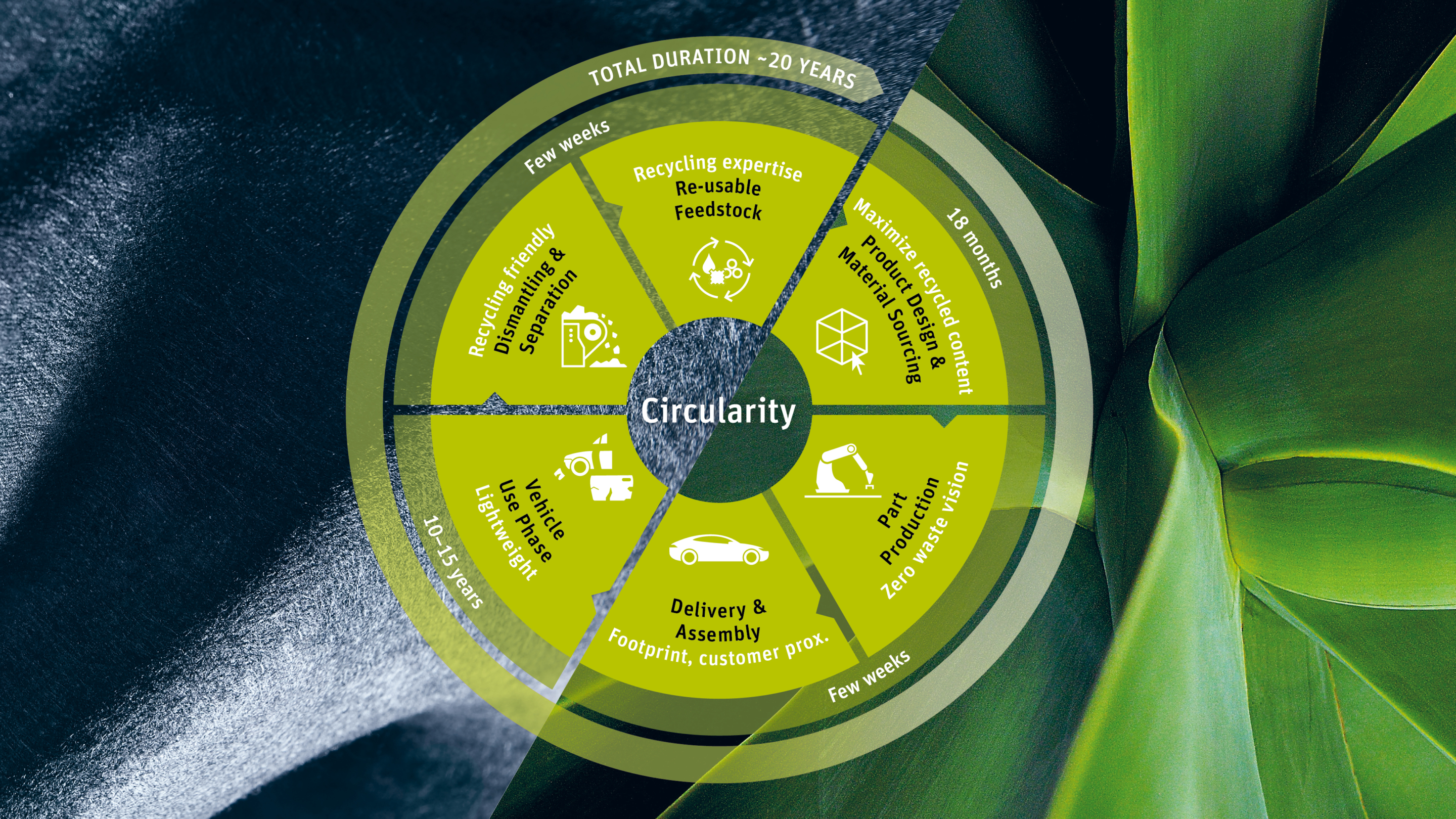
New regulations like Europe’s End-of-Life Vehicles (ELV) Directive are pushing the automotive industry toward a circular economy. This means that making vehicles fully recyclable at the end of their life is becoming increasingly important. It will drive demand for automotive components with excellent environmental performance throughout their life cycle that can uphold the highest material quality and technical performance.
Science Based Targets initiative
Recognizing the serious environmental challenges facing the world today and the resulting need for rapid and significant reductions in global greenhouse gas (GHG) emissions, Autoneum has committed to reducing its absolute scope 1 and 2 GHG emissions by 20% by 2027 from a 2019 base year. We also commit to reducing our absolute scope 3 GHG emissions from purchased goods and services by 20% within the same timeframe. Our GHG emission reduction targets were validated by the SBTi on January 12, 2023, and are in line with the goals of the Paris Agreement to limit global warming to well below 2°C. We are thus taking another important step toward a sustainable future of mobility.

Innovation of resource-efficient products
Operational Target
- All Autoneum product innovations deliver an improvement compared to reference technology as assessed by the Innovation Sustainability Evaluation (ISE)
Innovation and sustainability
Autoneum uses materials like plastic polymers, aluminum and chemicals to produce parts. This impacts natural resources and water use, which can potentially lead to pollution. The manufacturing processes also produce waste, for example by using rectangular blanks. To address these issues, Autoneum is working on several improvements: reducing material use by developing lightweight products; increasing material efficiency in production and reclaiming the waste; using recycled materials such as cotton and polyester; and designing monomaterial products that can be easily recycled at the end of the vehicle’s life. We focus on enhancing both the environmental performance and the acoustic and thermal qualities of our products when optimizing existing components or developing ideas for new technologies or systems. Sustainability criteria are integrated into all stages of innovation.
Supporting our customers’ sustainability initiatives
To reduce the climate impact of our products throughout the entire lifecycle, we engage with our customers to develop and supply innovative, lightweight components that enhance vehicle efficiency. These components, such as underbody systems made of Ultra-Silent, are up to 50% lighter than traditional plastic alternatives, leading to lower fuel consumption and reduced CO₂ emissions. Additionally, our products improve vehicle aerodynamics, further contributing to emission reductions.
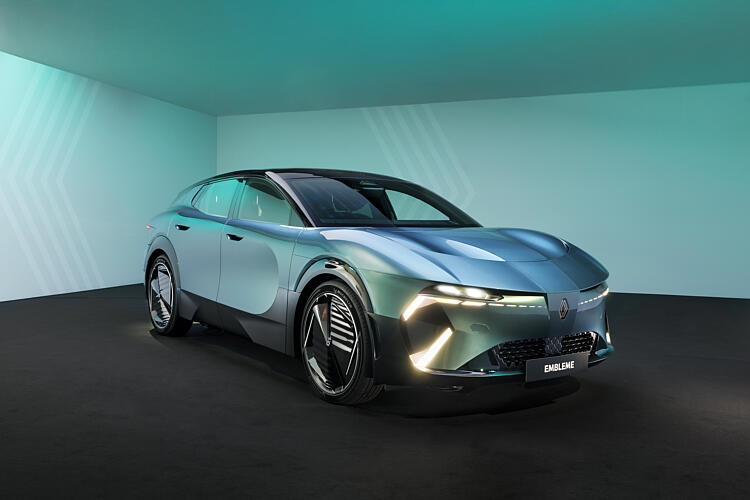
Autoneum supported Renault Group in 2024 with the development of Renault Emblème, a low-carbon demonstration car designed to reduce GHG emissions by 90% over its entire life cycle. As a key partner of the project, we further optimized the environmental performance of our sustainable Pure technologies, which were used for numerous components in the vehicle interior and exterior. By leveraging our proven expertise in the development of innovative lightweight and fully recyclable monomaterials with a high recycled content, as well as mastering products’ life cycle analysis, we were able to reduce the carbon footprint of our parts by 70% and contribute to a significant reduction in vehicle weight for Renault Emblème.
Policy Framework
Autoneum outlines our main environmental management principles in the Autoneum Management Policy on Quality, Environment, Energy, Health and Safety. We aim to reduce our energy use and emissions, manage risks from natural hazards and business interruptions, use resources efficiently throughout their life cycle, focus on sustainable actions across all business areas, and follow all relevant laws and internal guidelines. Autoneum achieves this goal by using energy-efficient technologies and practices. By doing this, we help to reduce our environmental footprint and contribute to efforts to mitigate global warming. Every year, we work on becoming more energy-efficient by following the energy reduction guidelines set out by Group Operations. The potential savings from these guidelines are estimated and tracked using a continuous improvement tool. The guidelines are updated every year with new ideas that are tested and implemented through pilot projects. The Management Policy is complemented by various internal policies that address the handling of emissions, waste, water, chemicals, and hazardous substances Autoneum expects all employees to act in an environmentally friendly and safe manner. This approach is guided by the 20 Principles for Good Environment, Health and Safety Behavior, which were revised in 2024 to reflect the new Autoneum values.
Management System for Environment, Health & Safety
The aim of Autoneum’s Environment, Health & Safety Management System (MEHS), launched in 2014, is to implement consistent EHS standards and requirements at all Autoneum locations worldwide. To ensure comparability on a global level, the MEHS is based on international and national laws and regulations, as well as the requirements of environmental management system ISO 14001.
In order to support the implementation of MEHS worldwide, Autoneum has developed a specialized MEHS training program for EHS functions. The trainings cover environmental topics such as emission, water, waste and energy management as well as overall sustainability management.