
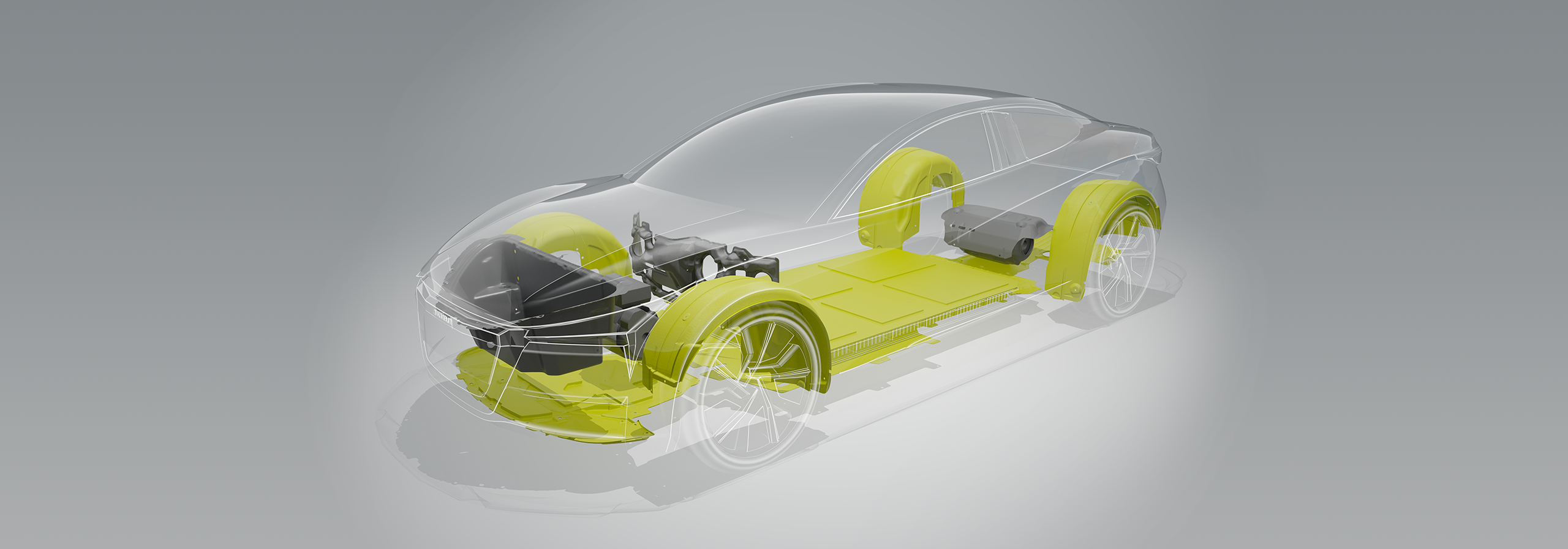
Exterior components for light vehicles
Engine bay
The engine bay is the vehicle area where most of the noise and heat sources are concentrated. With innovative lightweight and multifunctional components, Autoneum helps automobile manufacturers to address new regulations for pass-by noise and CO2 emissions.
Autoneum offers the following products among others for application in the engine bay:
*Components specifically for vehicles with combustion drive
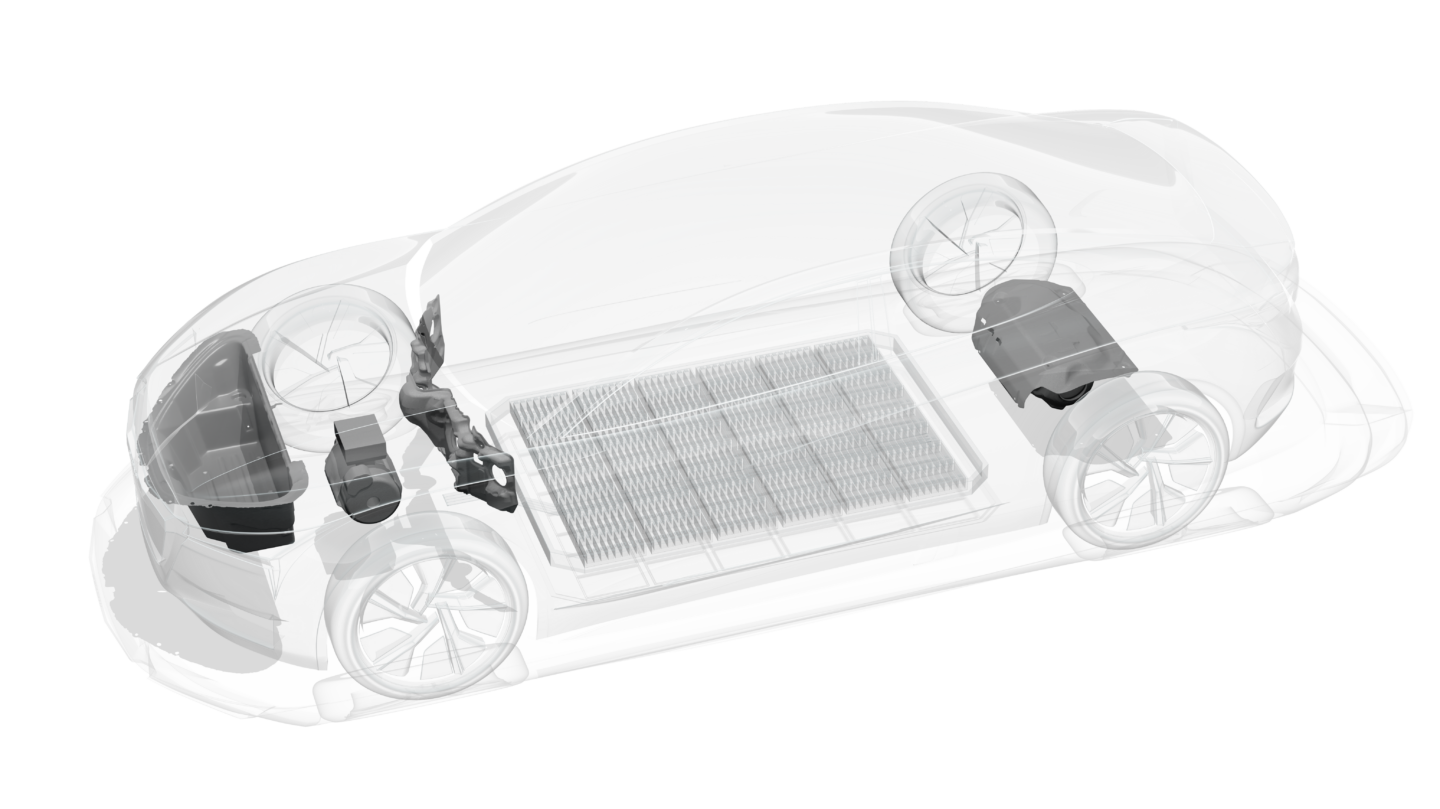
Technologies for the engine bay
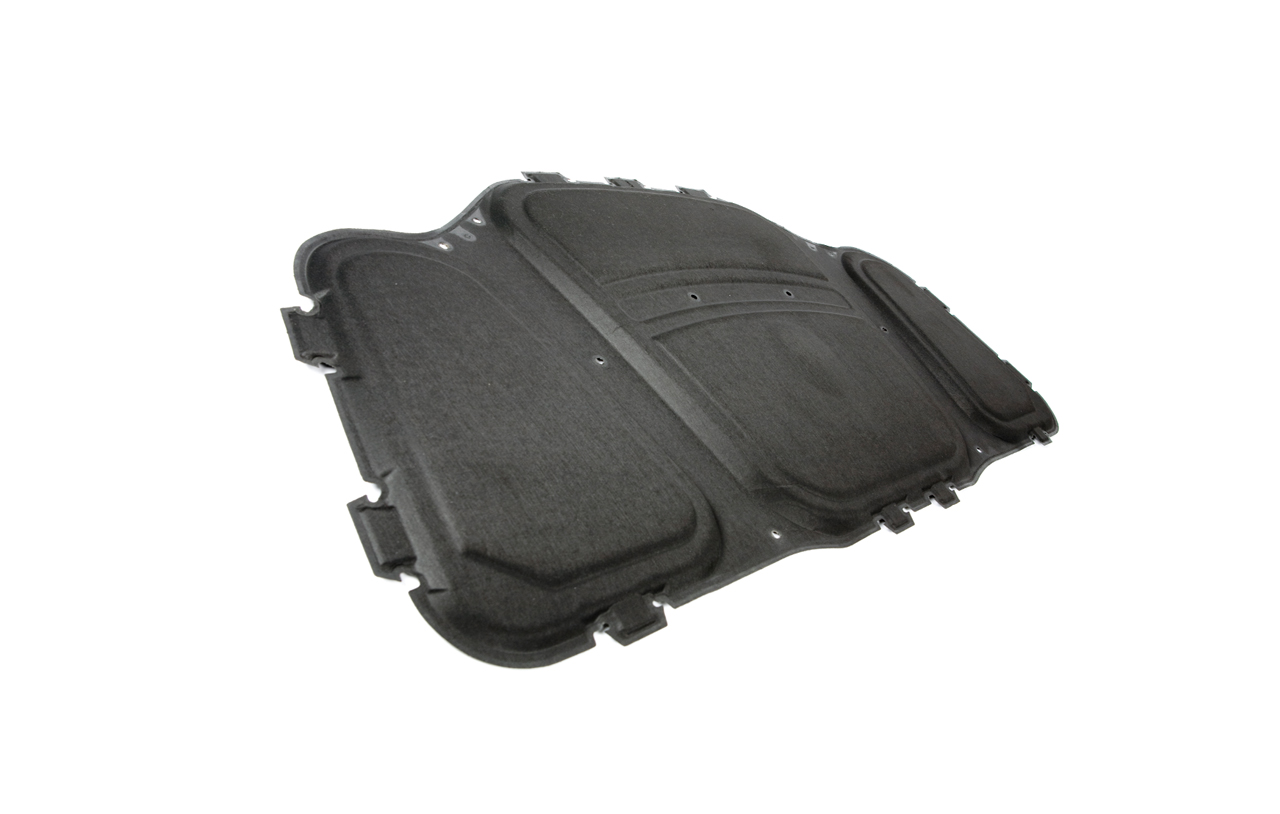
Hybrid-Acoustics PET
Sustainable noise protection in the engine bay
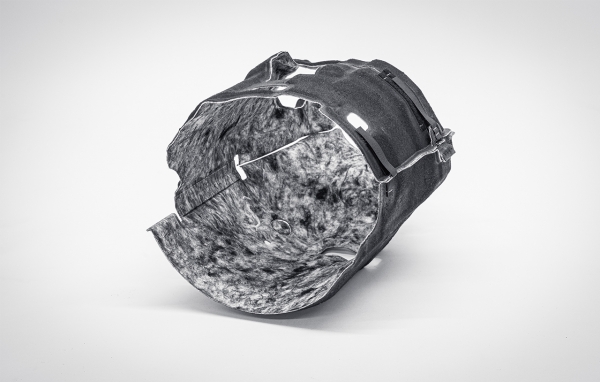
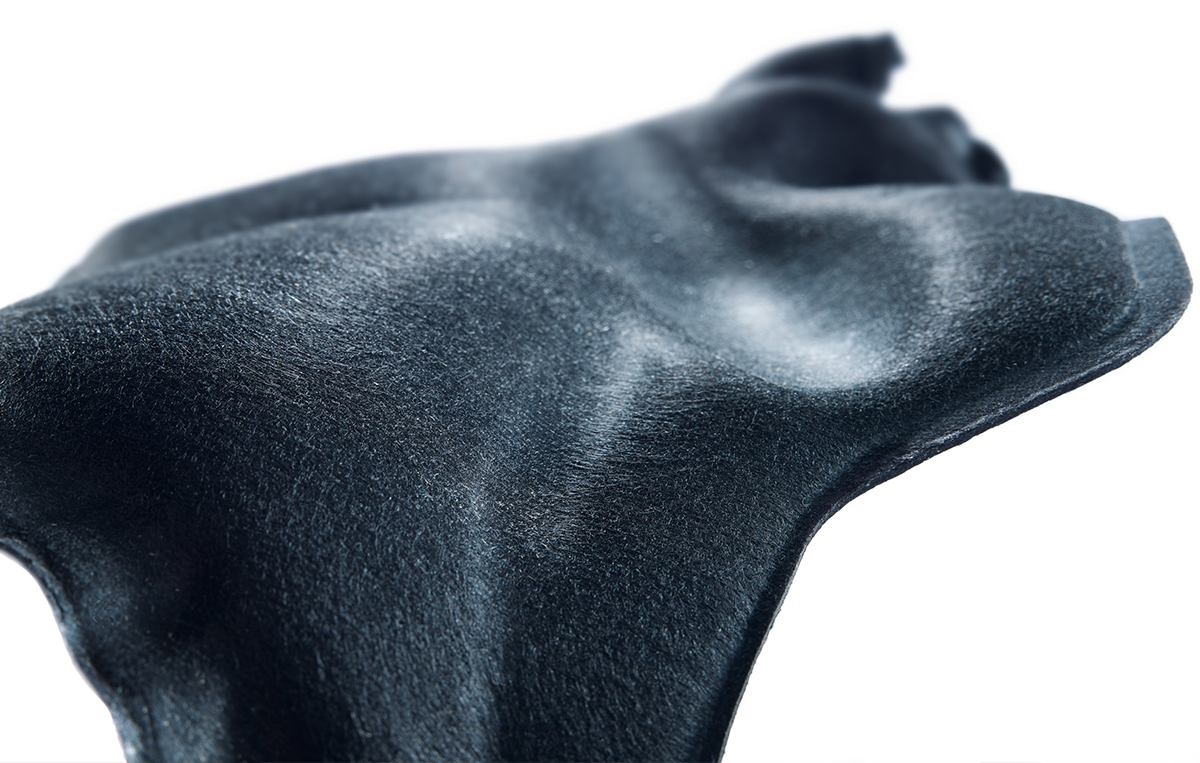
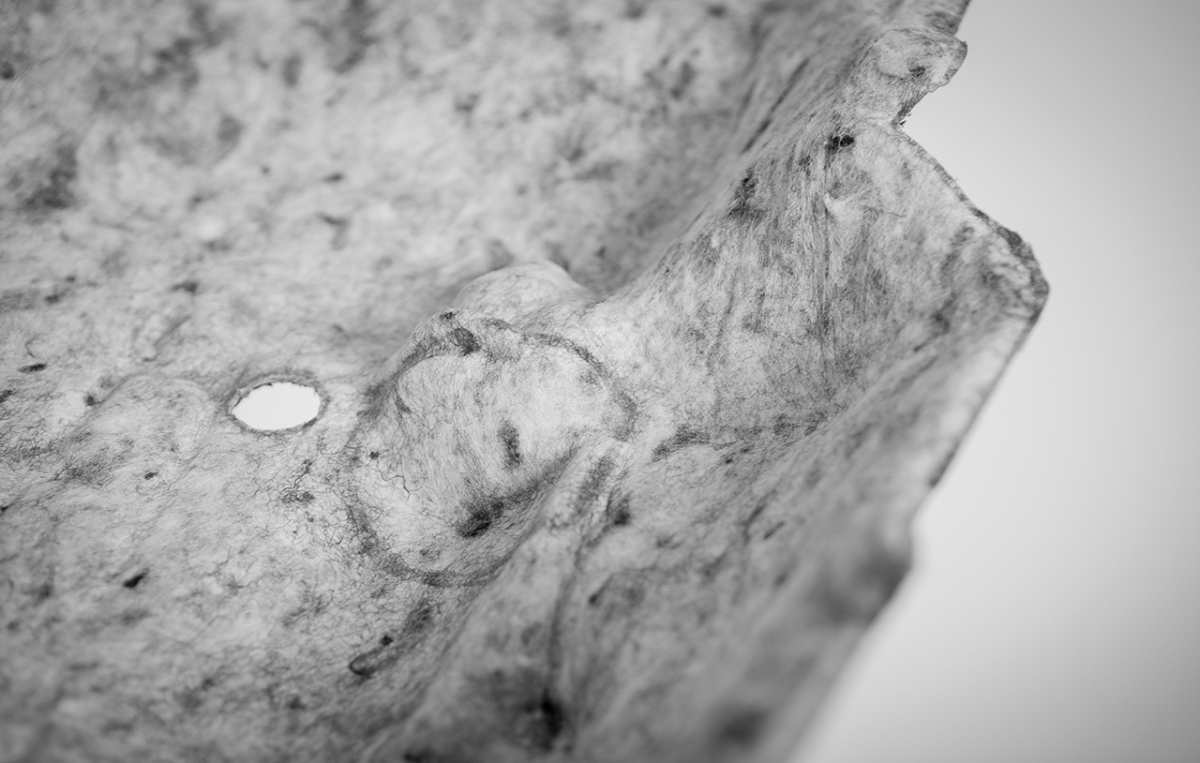
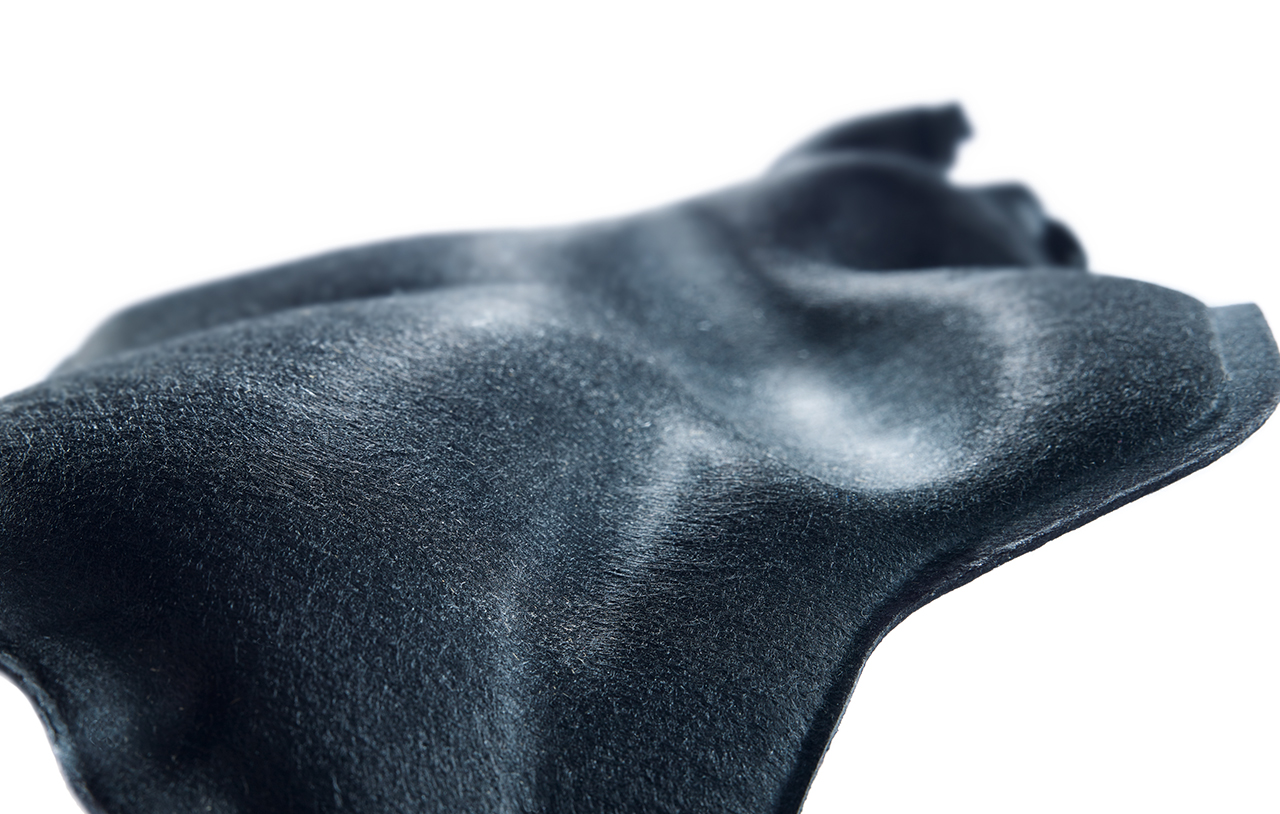
With Hybrid-Acoustics PET, Autoneum has adapted its textile interior technology Hybrid-Acoustics for use in the engine compartment. The patented innovation is based on a unique fiber material that acts as an insulator and absorber at the same time. Among others, Hybrid-Acoustics PET is used to encapsulate electric motors, thereby reducing noise directly at the source and particularly attenuating high-frequency sounds of the electric drive unit. This key technology accordingly ensures optimum noise protection in the passenger cabin and greater driving comfort.
At the same time, components made of Hybrid-Acoustics PET convince with their low weight. Compared to conventional insulators, they are up to 40 percent lighter and thereby contributing to a greater driving range. They are also flameproof and find application as powertrain-mounted insulators for combustion engines thanks to their temperature resistance of up to 180°C.
The parts, which consist to a large extent of recycled PET fibers, are produced waste-free and are completely recyclable – an outstanding life cycle assessment compared to equivalent components in the engine bay.
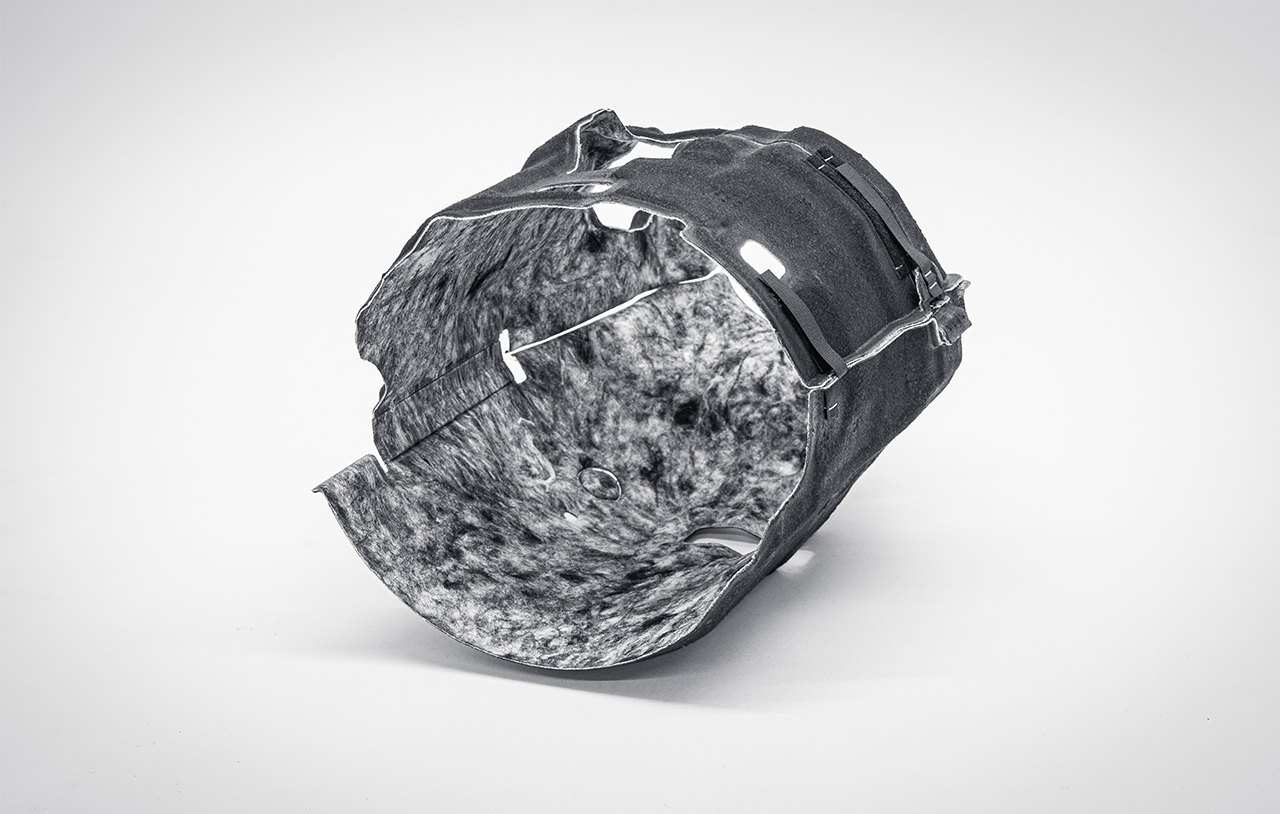
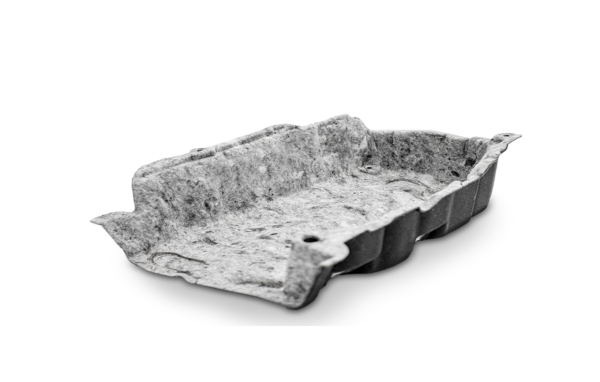
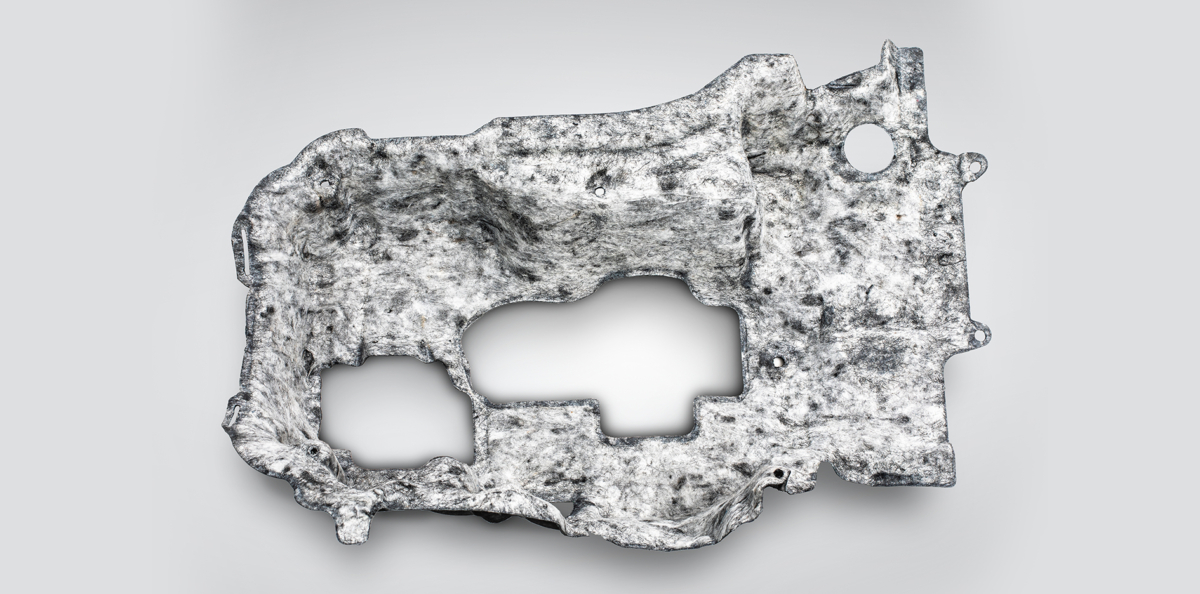
Theta-FiberCell
Key Technology for Engine Encapsulations
Innovative engine encapsulations enhance the efficiency and sustainability of vehicles: The heat storage in the engine bay achieved with the encapsulations reduces fuel consumption at the next cold start, which in turn leads to lower vehicle emissions.
Autoneum recognized the growing importance and far-reaching potential of the thermo-acoustic insulation of vehicles at an early stage and has developed an innovative material: Theta-FiberCell combines the benefits of the fiber absorber Theta-Fiber and foam absorber Theta-Cell. Theta-FiberCell, the key technology for engine encapsulations launched on the market in 2012 is based on Autoneum’s long-standing experience and takes into account customer-specific product requirements such as optimum noise protection and integrated thermal insulation. The high temperature stability entailed by this thermal insulation is also of major importance for vehicle manufacturers: Theta-FiberCell is barely flammable and can withstand temperatures of up to 200°C.
Theta-FiberCell also appeals due to its lightweight and displays high resistance towards engine vibrations. Theta-FiberCell can be used for engine encapsulations mounted onto the engine or vehicle.
As well as the acoustic absorption of interior (by up to four decibel) and exterior (by up to eight decibel) noise, the fiber-foam solution enables heat to be stored for long periods after the vehicle has been parked. After being switched off for 12 hours, the temperature of an engine with Theta-FiberCell encapsulation is six degrees higher than one without this special insulation.
This difference in temperature results in a higher engine oil temperature and less internal friction of the engine which in turn enhances the efficiency and sustainability of vehicles. Each six degrees increase in engine oil temperature reduces CO2 emissions by three grams per kilometer driven.
Theta-Fiber
Multifunctional Non-Woven Technology
With Theta-Fiber, Autoneum offers a robust and multifunctional non-woven material for treatment in the engine bay. Up to 70 percent recycled fiber material is used for manufacturing components based on the semi-structural Theta-Fiber material technology.
Theta-Fiber stands out against conventional non-woven components above all thanks to its high temperature resistance: While traditional thermoplastic materials are able to withstand temperatures of up to 150°C, noise and thermal insulation parts based on Theta-Fiber can also be applied at temperatures of up to 200°C.
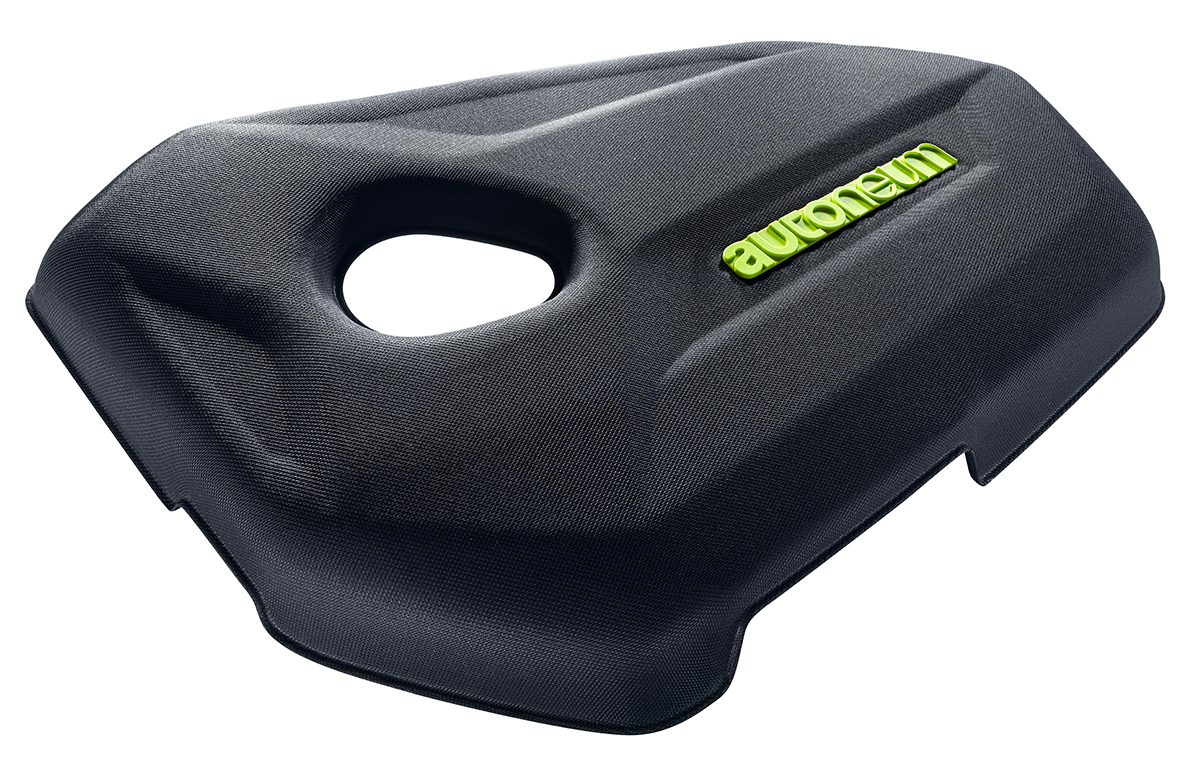
Compared to traditional heavy engine covers made of solid plastic, Theta-Fiber engine covers achieve weight savings of up to 60 percent, reduce the interior and exterior noise of vehicles and insulate heat generated by the engine.
Due to its high temperature stability, resistance to vibrations, lightweight, good acoustic properties and integrated thermal insulation, Theta-Fiber is a core element of Autoneum’s innovative engine encapsulations.
Theta-Cell
Durable and Lightweight Foam Components
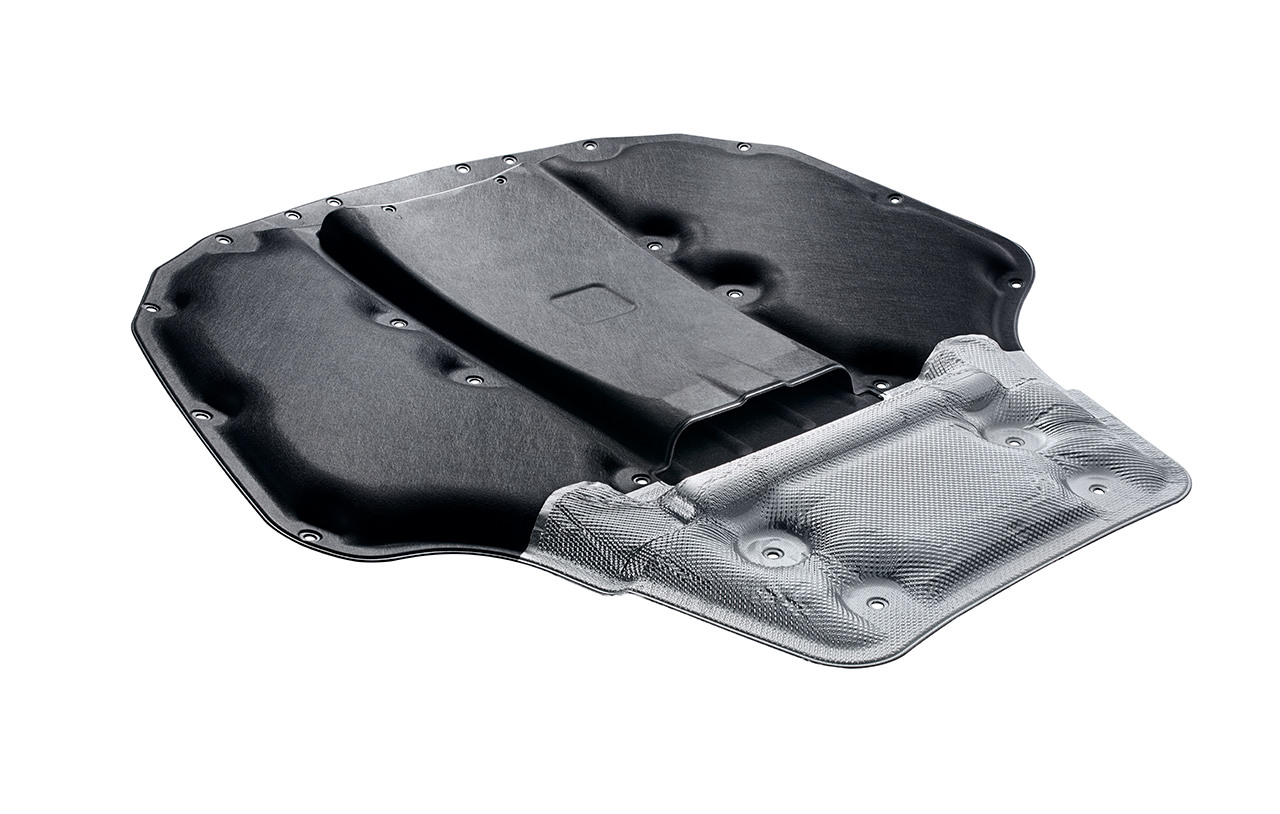
Theta-Cell is an innovative polyurethane foam material developed by Autoneum. It is used for different applications such as lightweight and multifunctional hoodliners, outer dashes, tunnel insulators and battery covers. Compared with conventional acoustic absorbers, Theta-Cell components can be used to achieve weight reductions of up to 60 percent as well as high thermal insulation.
Products based on Theta-Cell are able to withstand temperatures of up to 180°C at peak; they meet customer requirements and legal provisions with regard to the non-flammability of components for the engine bay. They are also oil and water-repellent and help to reduce the interior and exterior noise of vehicles.
Theta-Cell combines with the felt material Theta-Fiber to form the substrate Theta-FiberCell that is used for the engine encapsulations provided by Autoneum.
Ultra-Silent frunk
Lightweight, sustainable and acoustically optimized
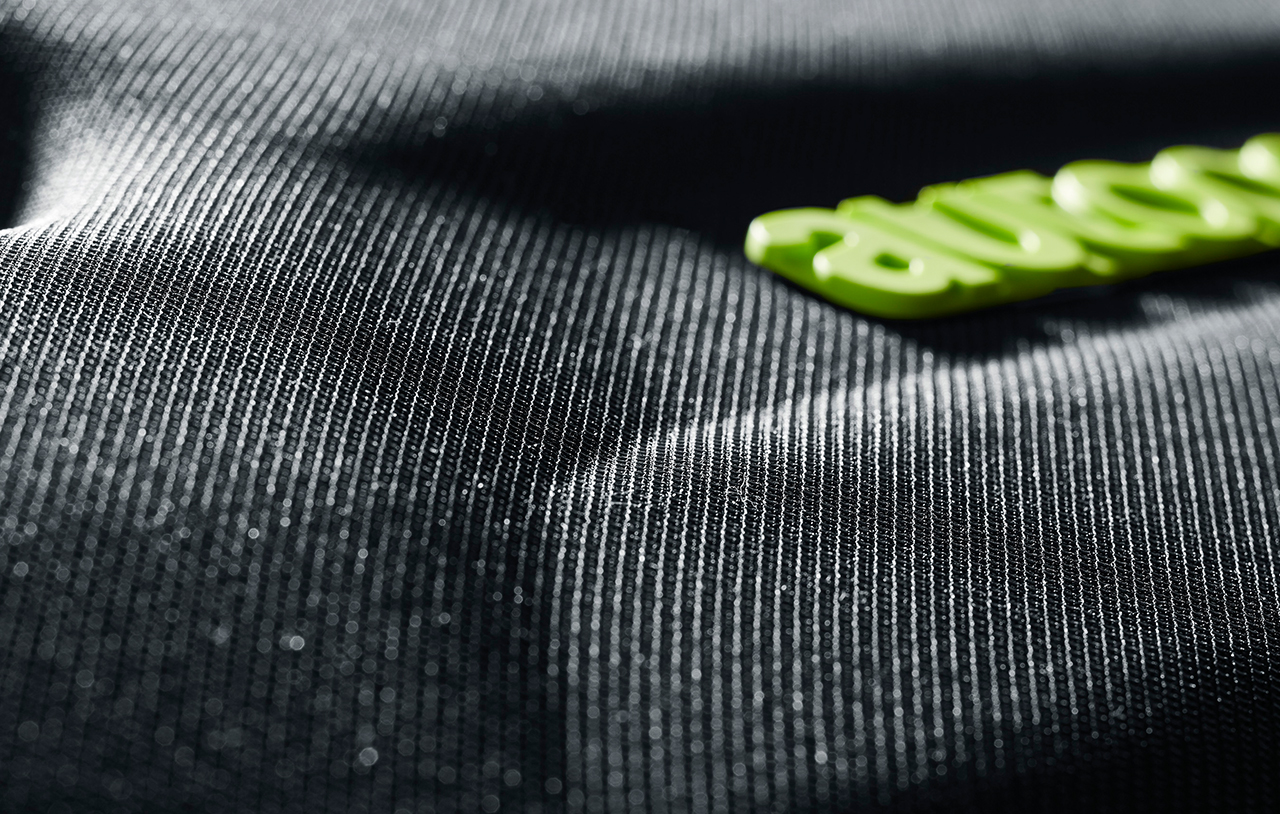
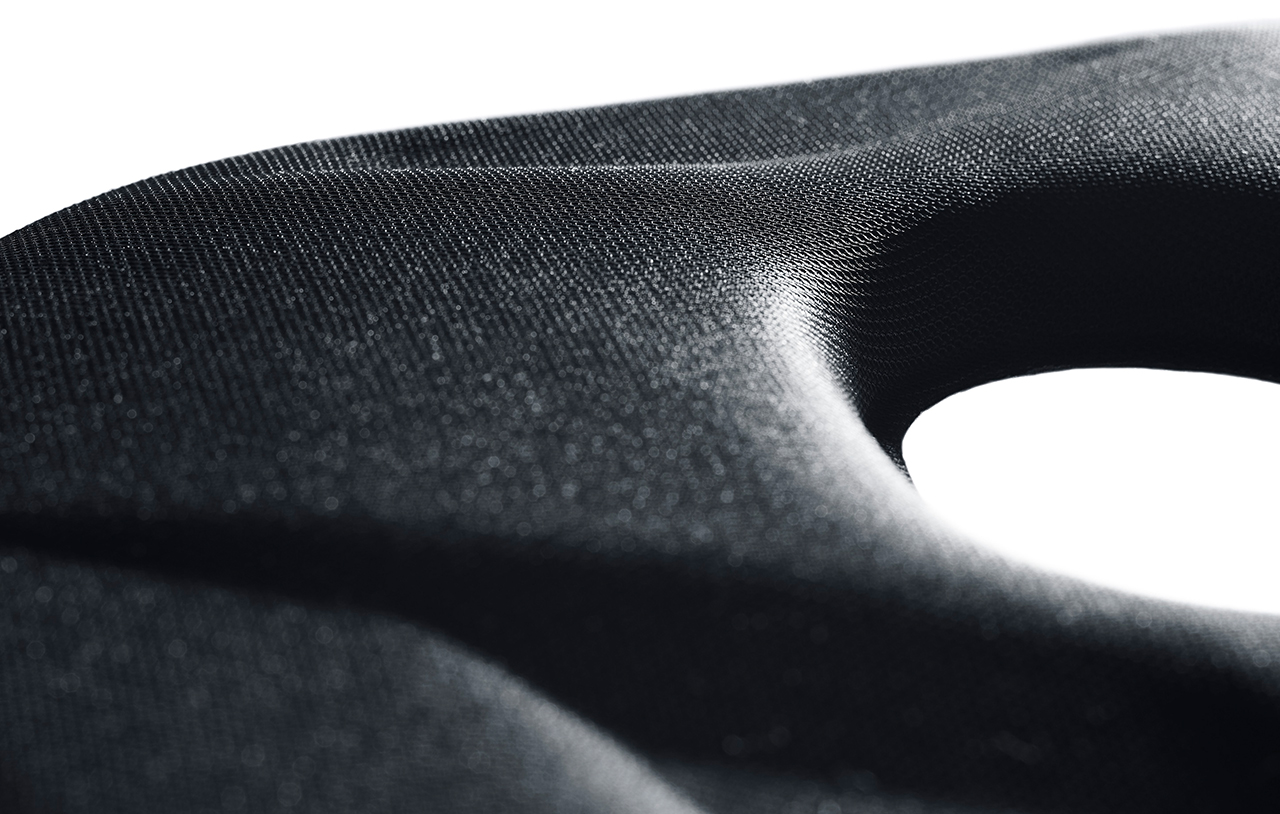
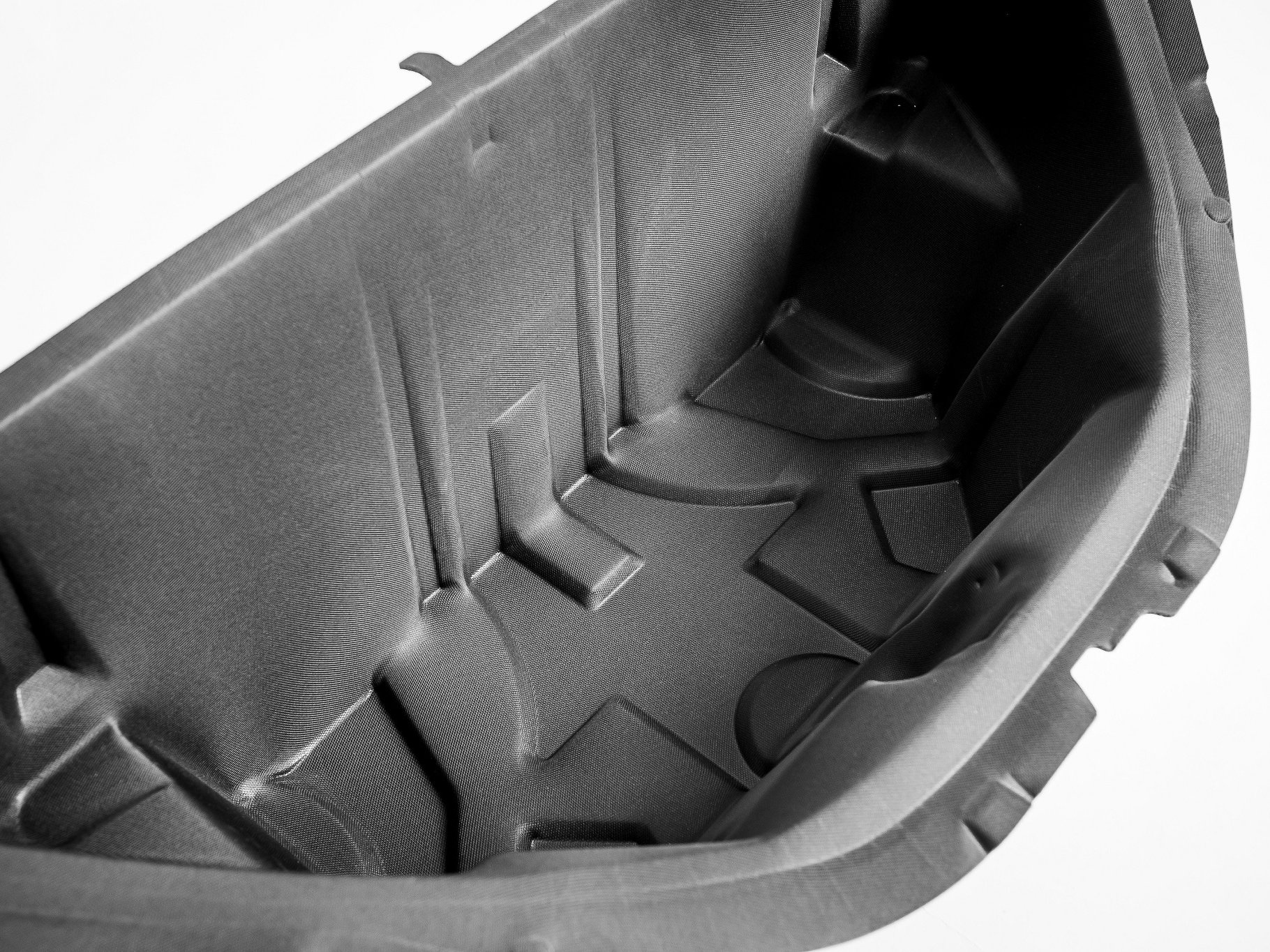
Autoneum's Ultra-Silent frunk is a one-piece textile solution for the front trunk of electric vehicles. Made from up to 70% recycled PET, the frunk is designed with zero-waste manufacturing and full recyclability in mind. Additionally, it is over 50% lighter compared to traditional plastic solutions, resulting in lower electric energy consumption and a longer driving range.
Engineered for superior acoustic performance, the Ultra-Silent frunk more than doubles the noise absorption of traditional solid plastic components — without the need for additional absorbers. With the Ultra-Silent frunk, drivers can expect a quieter and more sustainable ride without compromising on space or performance.
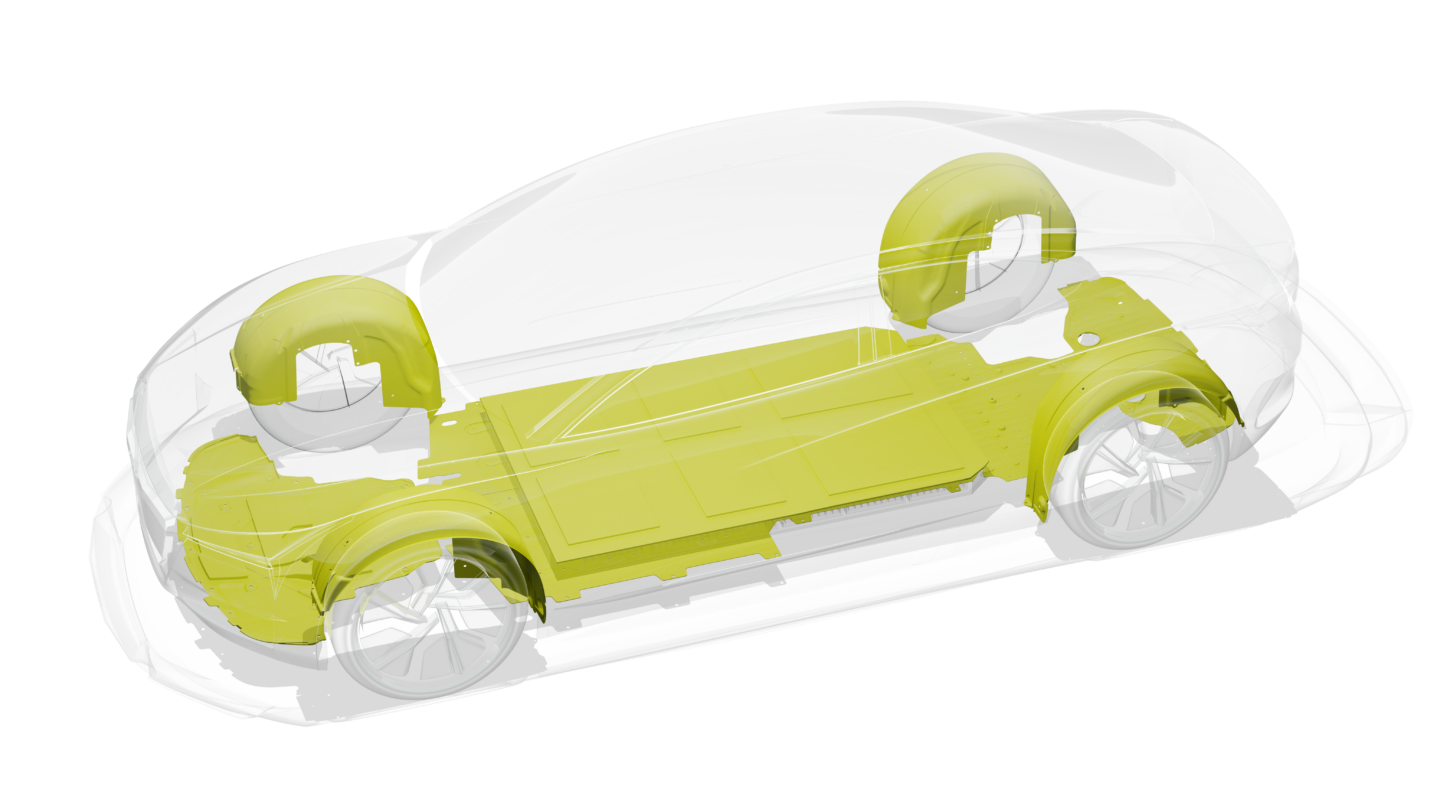
Underbody
Textile-based and correspondingly lightweight underbody systems of Autoneum absorb noise and therefore simultaneously reduce the interior and exterior noise of cars. They also enhance the aerodynamics of a vehicle. This leads to lower fuel consumption and reduced vehicle emissions.
Autoneum offers the following products among others for underbody application:
*Components specifically for vehicles with combustion drive
Technologies for the underbody
Propylat
50% lighter than plastic components
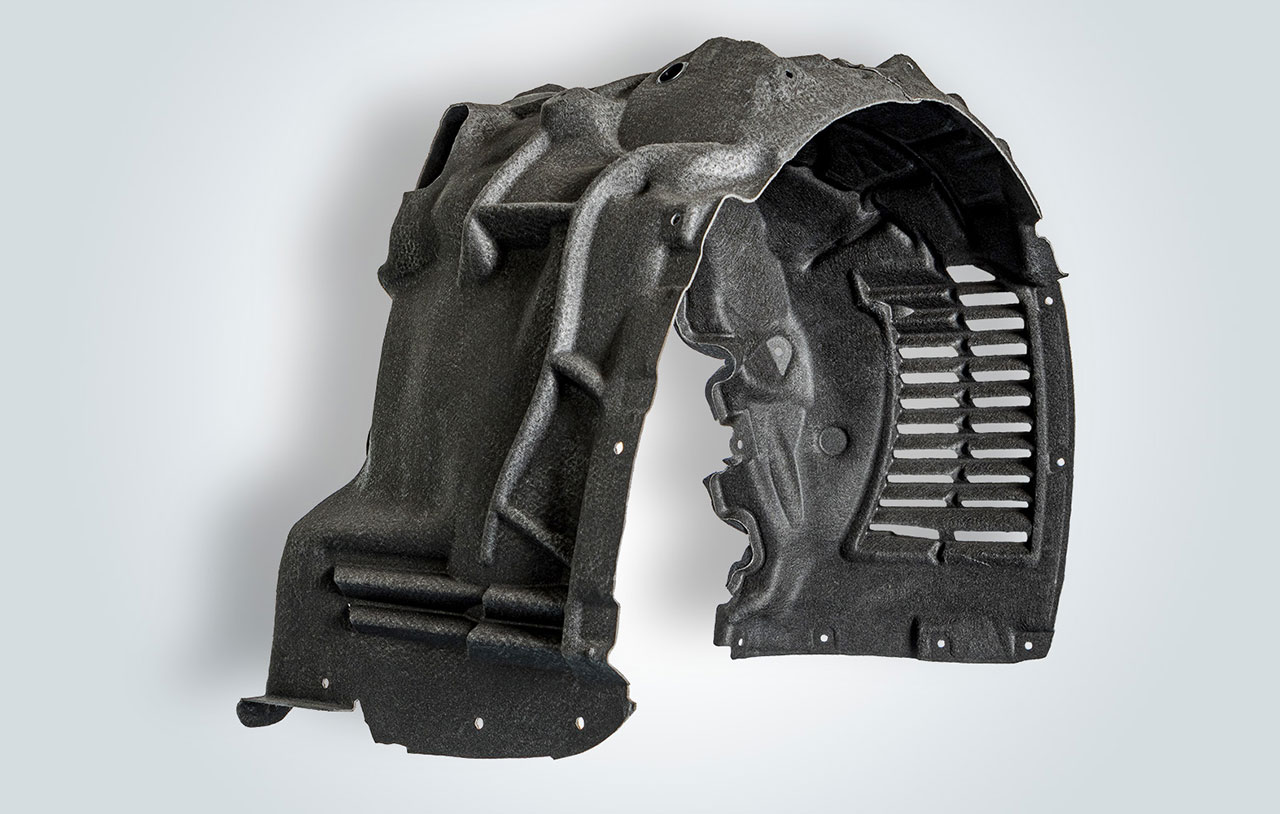
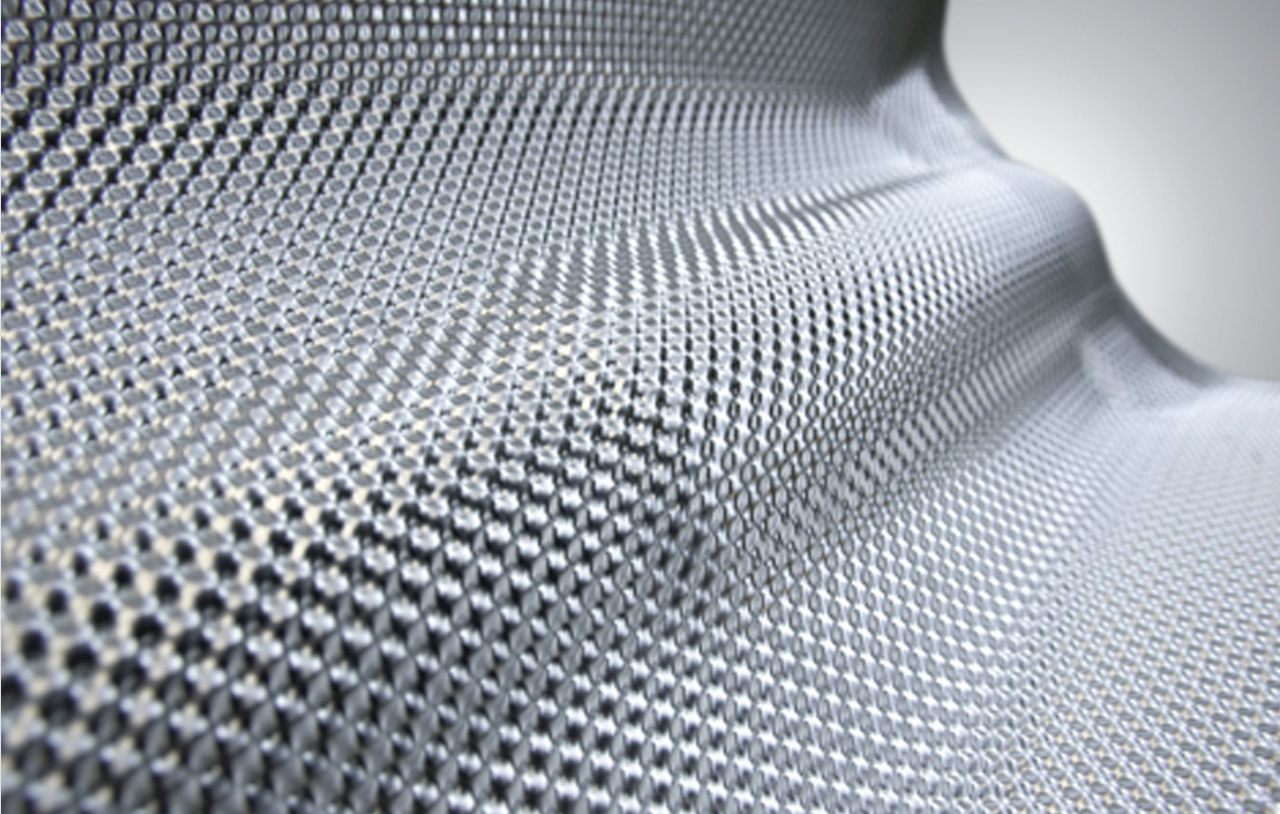
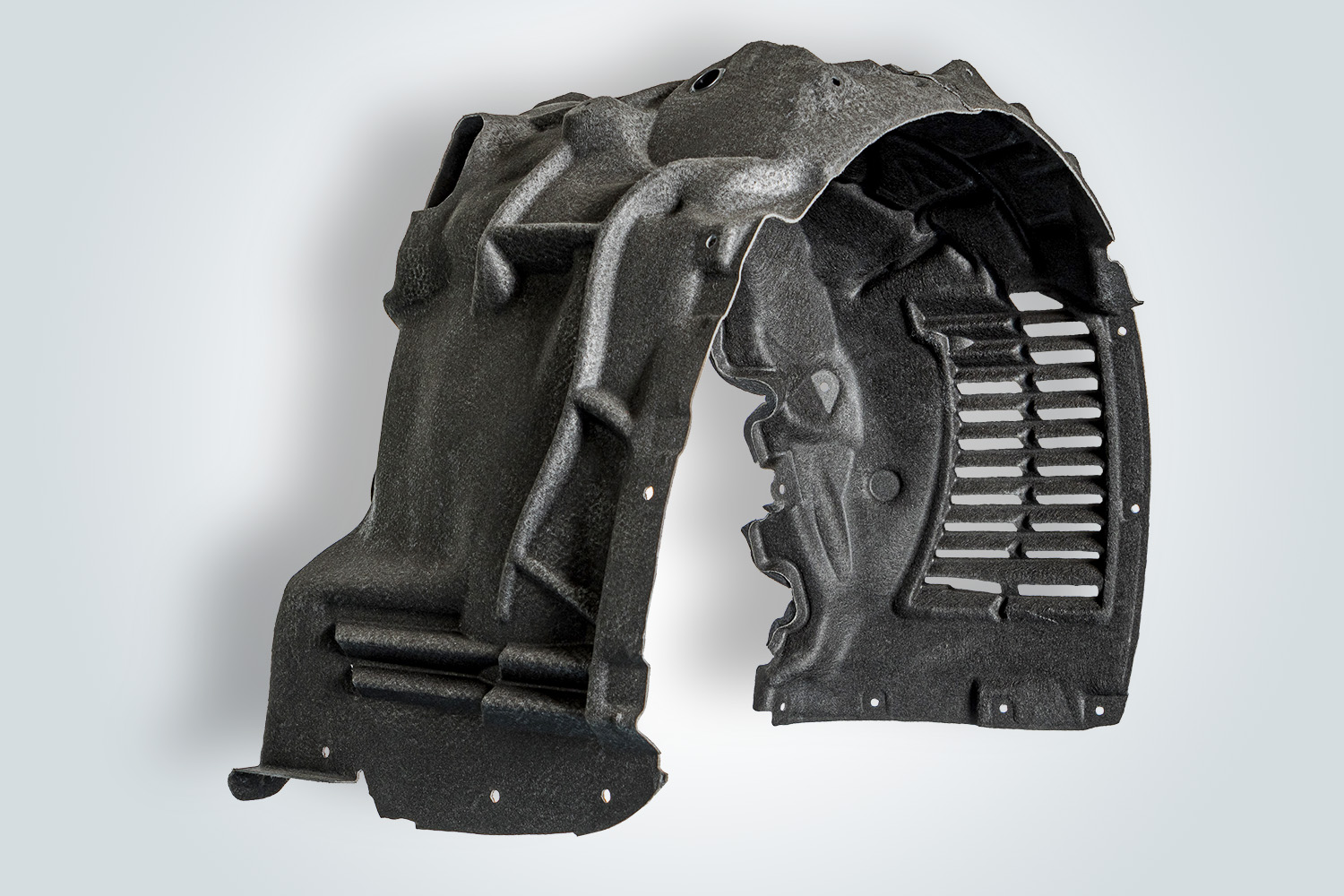
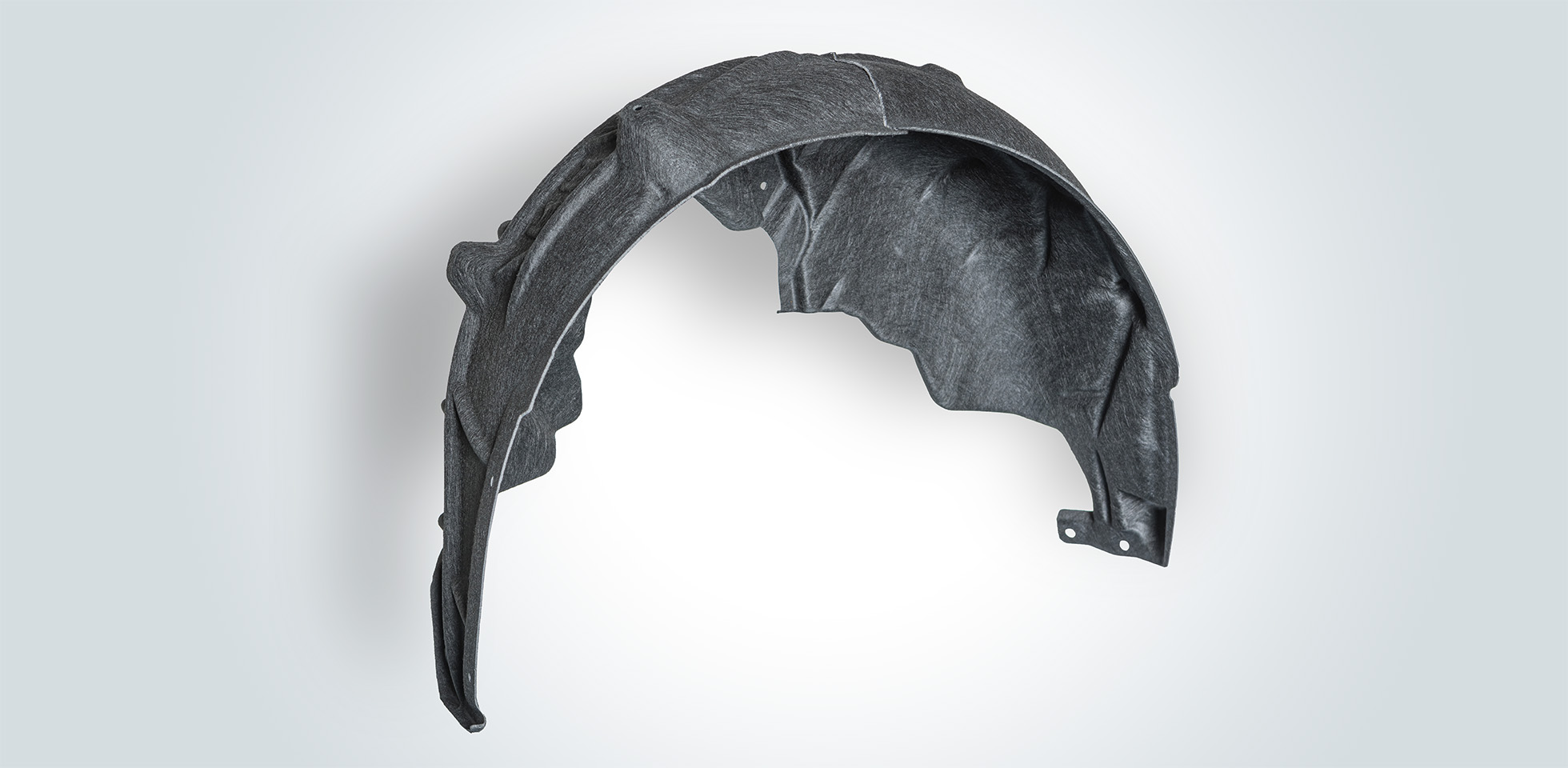
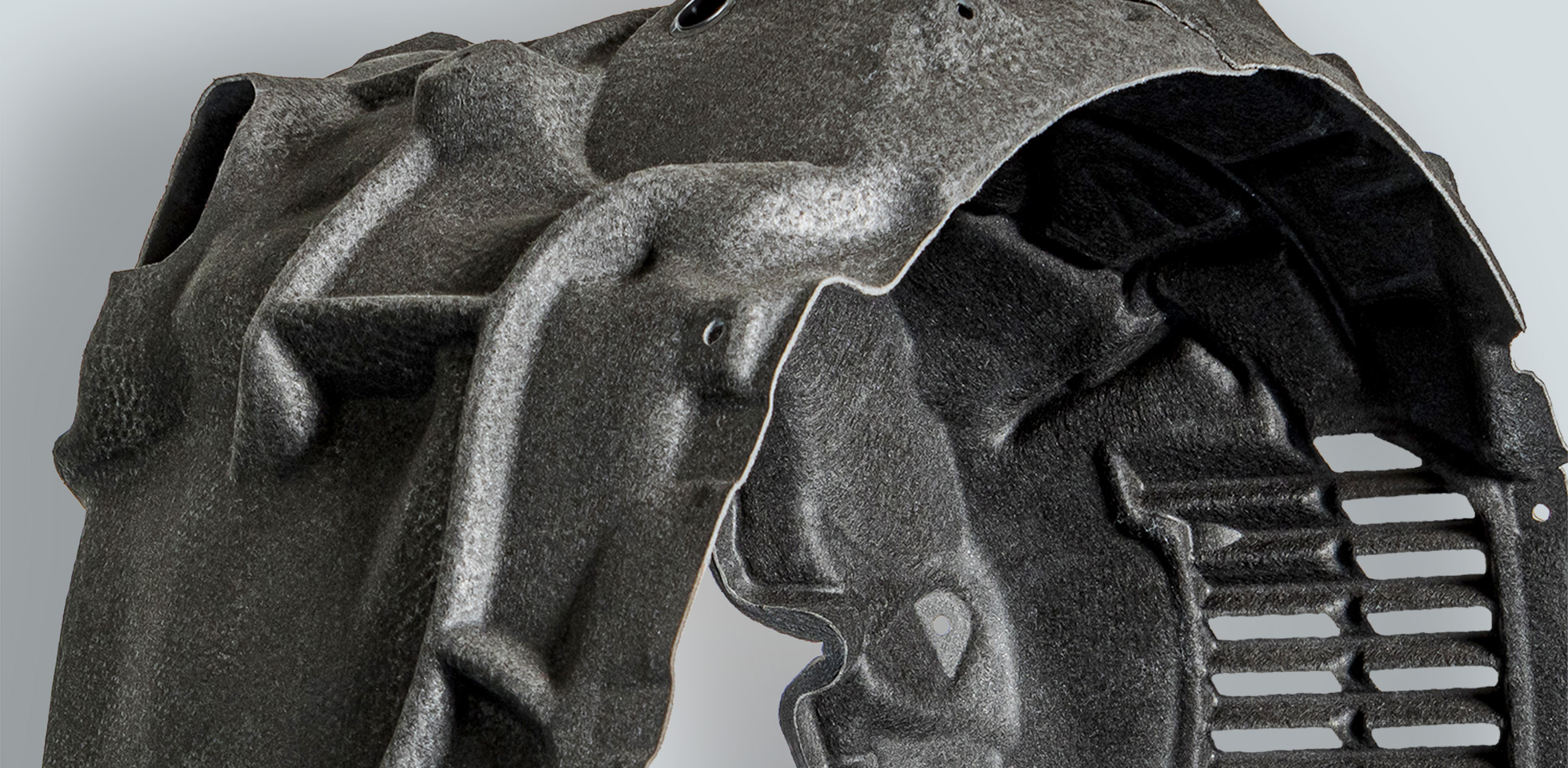
Autoneum’s sustainable, textile and lightweight Propylat technology reduces both interior and exterior noise of vehicles. The versatile technology consists of a mixture of synthetic and natural fibers with high recycled content. Thanks to the flexible material composition and the variable density and thickness of the porous material, its acoustic and other technical properties can be tailored to individual customer requirements.
This allows for a versatile application of Propylat in a variety of interior and exterior components such as wheelhouse outer liners, trunk trim, underbody systems and carpets. For instance, Propylat-based wheelhouse outer liners significantly reduce rolling noise both inside and outside the vehicle while at the same time offering optimum protection against stone chipping and spray water.
In terms of sustainability, Propylat always contains a high proportion of recycled fibers – up to 100% in some variants – and can be manufactured with zero waste. Thanks to the full vertical integration of Propylat and Autoneum’s extensive expertise in recycling processes, the technology also contributes to significant waste reduction.
Propylat PET, which consists of 100% PET, of which up to 70% are recycled fibers, is fully recyclable at the end of product life and is part of Autoneum Pure, the Company’s sustainability label for technologies with excellent environmental performance throughout the product life cycle.
Ultra-Silent Tune
Lightweight sustainability champion
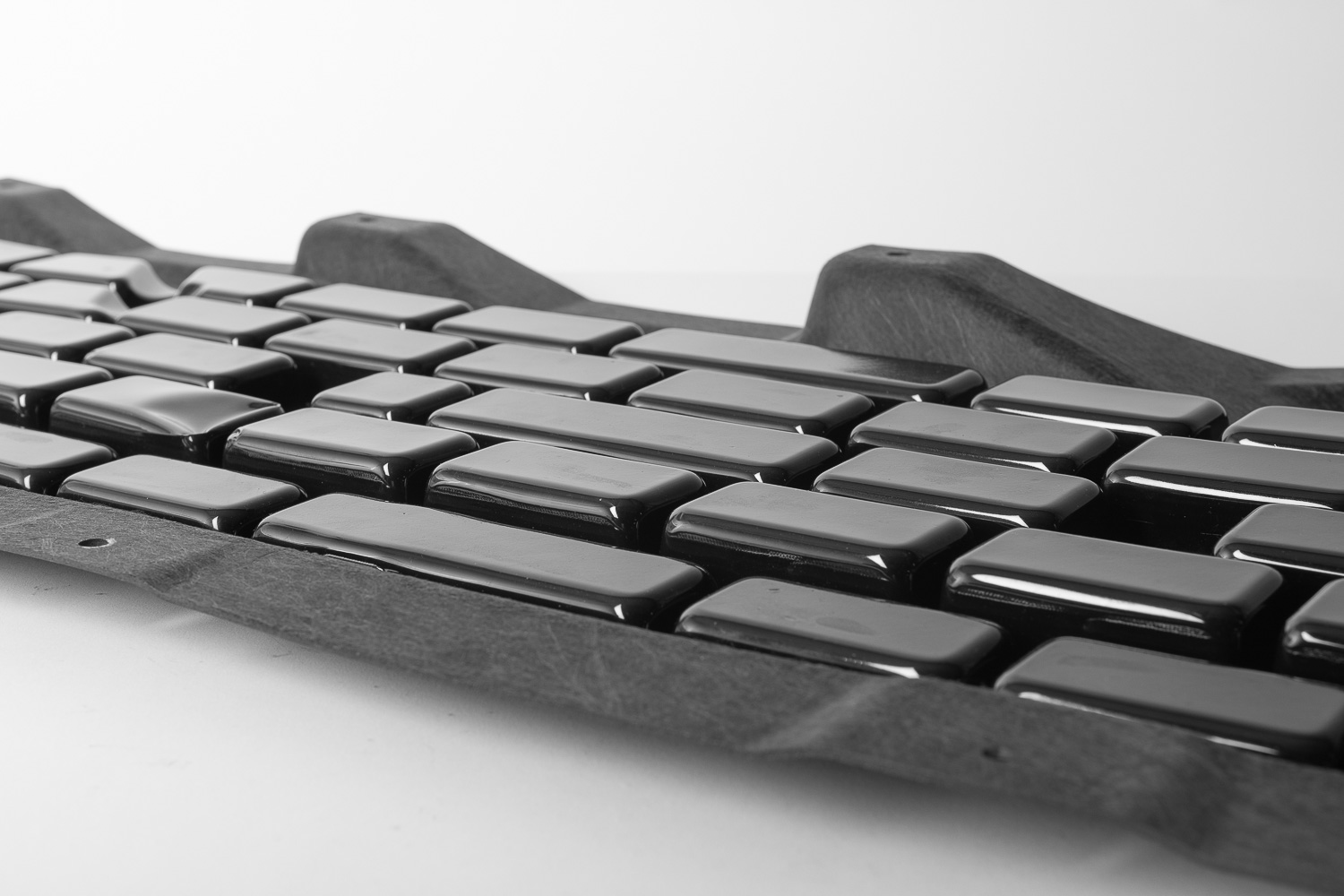
Ultra-Silent Tune is Autoneum's latest evolution of the proven Ultra-Silent technology, designed to enhance sound absorption for vehicle underbodies. Combining lightweight, porous materials with engineered acoustic chambers, Ultra-Silent Tune reduces noise in the critical 800–1600 Hz range. Made from 100% polyester with up to 60% recycled PET, it is recyclable and durable while lowering exterior noise by up to 0.5 dB(A) and helping OEMs meet strict CO₂ and noise regulations. Ultra-Silent Tune improves passenger comfort, supports sustainable vehicle design and resists water, physical impacts and fixation stress without compromising safety.
RIMIC
Heat Protection and Noise Absorption
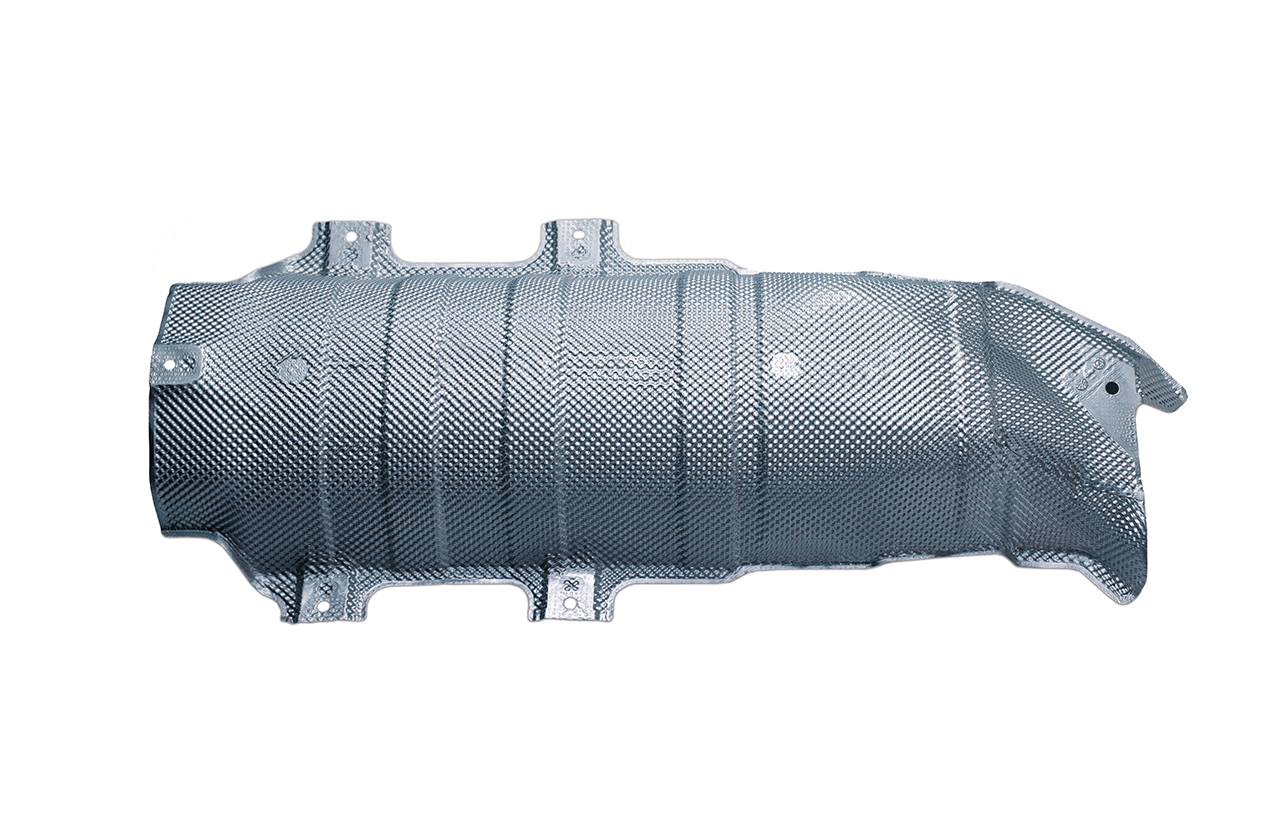
Heatshields are used in vehicles primarily to provide protection against the heat that arises in the engine bay and the exhaust system. In order to shelter this radiant warmth, these shields are heat-resistant up to 500°C.
Heatshields based on Autoneum’s lightweight, fully recyclable RIMIC technology not only protect against heat. At the same time, they also lower noise emissions of vehicles. This noise reduction is achieved by means of a special perforation developed by Autoneum. It converts the airborne sound into thermal energy and absorbs it. Using in-house production processes, these perforations are applied specifically only at predefined areas to ensure optimal heat protection and durability.
The acoustic performance of heatshields is controlled by the number of openings per shield. RIMIC can be used as a single layer or in combination with the Theta-Cell acoustic absorption technology in order to facilitate the absorption of high-frequency sounds of between two and six kilohertz.